Chasing the shadows: How backyard astronomers are helping ESA’s next space telescope
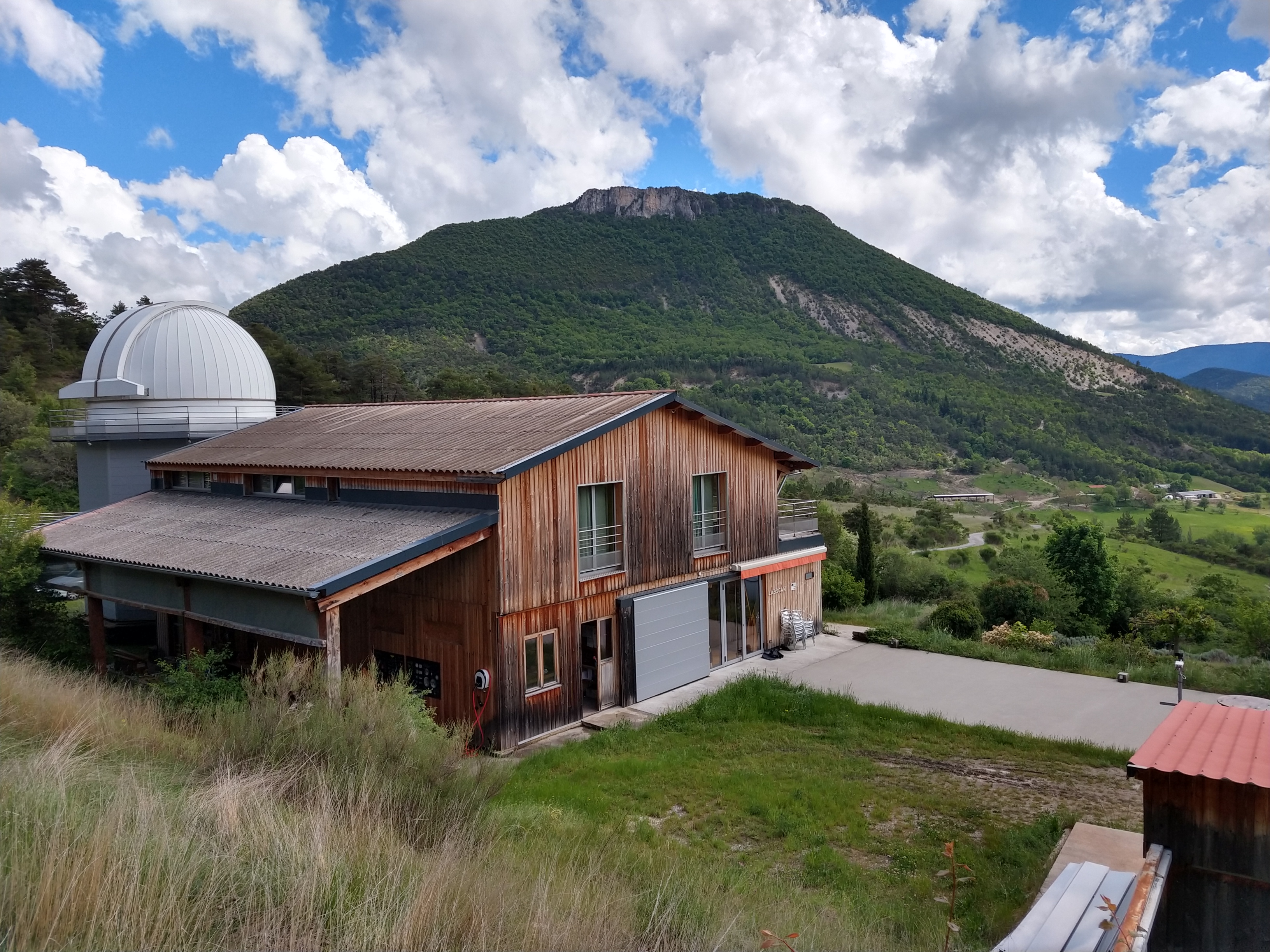 Observatoire des Baronnies Provençales, France.
At 2 AM in the French Prealps, my alarm pierced through the darkness. I was at an observatory in southern France and it was time to observe an exoplanet transit! But our telescope wasn’t pointing at the sky above us. Thick clouds had rolled in, accompanied by heavy rain and strong winds that made observations impossible. Fortunately, dusk had just begun in South America. We were preparing to remotely control a telescope high in the Chilean Andes, ready to chase the fleeting shadow of a faraway world. The observations would help keep the European Space Agency’s upcoming ARIEL mission on schedule — and these are the kinds of measurements that amateur astronomers can make from their own backyards with a small telescope!
The ARIEL mission: Europe’s upcoming exoplanet space telescope
More than 8000 exoplanets have been discovered since 1995. One of the most successful methods for discovering these faraway worlds has been to observe the planets when they transit in front of their star. This causes a temporary decrease in the brightness of the star whose light is being blocked. ESA’s upcoming ARIEL spacecraft is designed to observe 1000 of these transiting exoplanets.
When the star’s light passes through the atmosphere of a planet, the molecules in the planet’s atmosphere modify the starlight by imprinting their chemical signatures. This means that when a planet transits in front of its star, we receive some of this modified starlight. ARIEL is designed to specifically measure changes in the star’s light to study the atmospheres of these exoplanets.
How exoplanet transits are measured
When we observe an exoplanet transit, the brightness change of the star reveals two very important things. Firstly, the time it takes for the planet to cross the entire disk of the star tells us how fast the planet is moving in its orbit. This typically takes a few hours. According to the laws of gravity and orbits developed by Newton and Kepler, this speed is directly related to the distance from the star at which the planet is orbiting. Secondly, the amount by which the starlight decreases tells us the size of the planet. A large gas giant like Jupiter will block a larger fraction of the star’s light when compared to a smaller rocky planet like the Earth.
Systems where multiple planets orbit a star involve a complex gravitational dance, in which all the planets affect each other’s orbits. Because of this, the orbits of the planets slowly change over time. If we do not keep track of this drift in the transit timings, we risk scheduling our observations at the wrong time and missing a significant part of the planet’s transit across the star. This variation in the exoplanet transits is knows as transit timing variations (TTVs). For a space telescope like ARIEL, it is crucial to be aware of these TTVs in order to optimise its observation schedules as much as possible.
To tackle this issue of TTVs, the ARIEL ExoClock program has developed a citizen science program to collect as much data as possible on the timing of these exoplanet transits. Amateur astronomers from around the globe who have small or medium telescopes with a camera can track exoplanet transits and upload their results to the ExoClock database. This directly helps the ARIEL group to keep their transit timetables up-to-date! More information on their official website: ExoClock
An expedition to the French Prealps
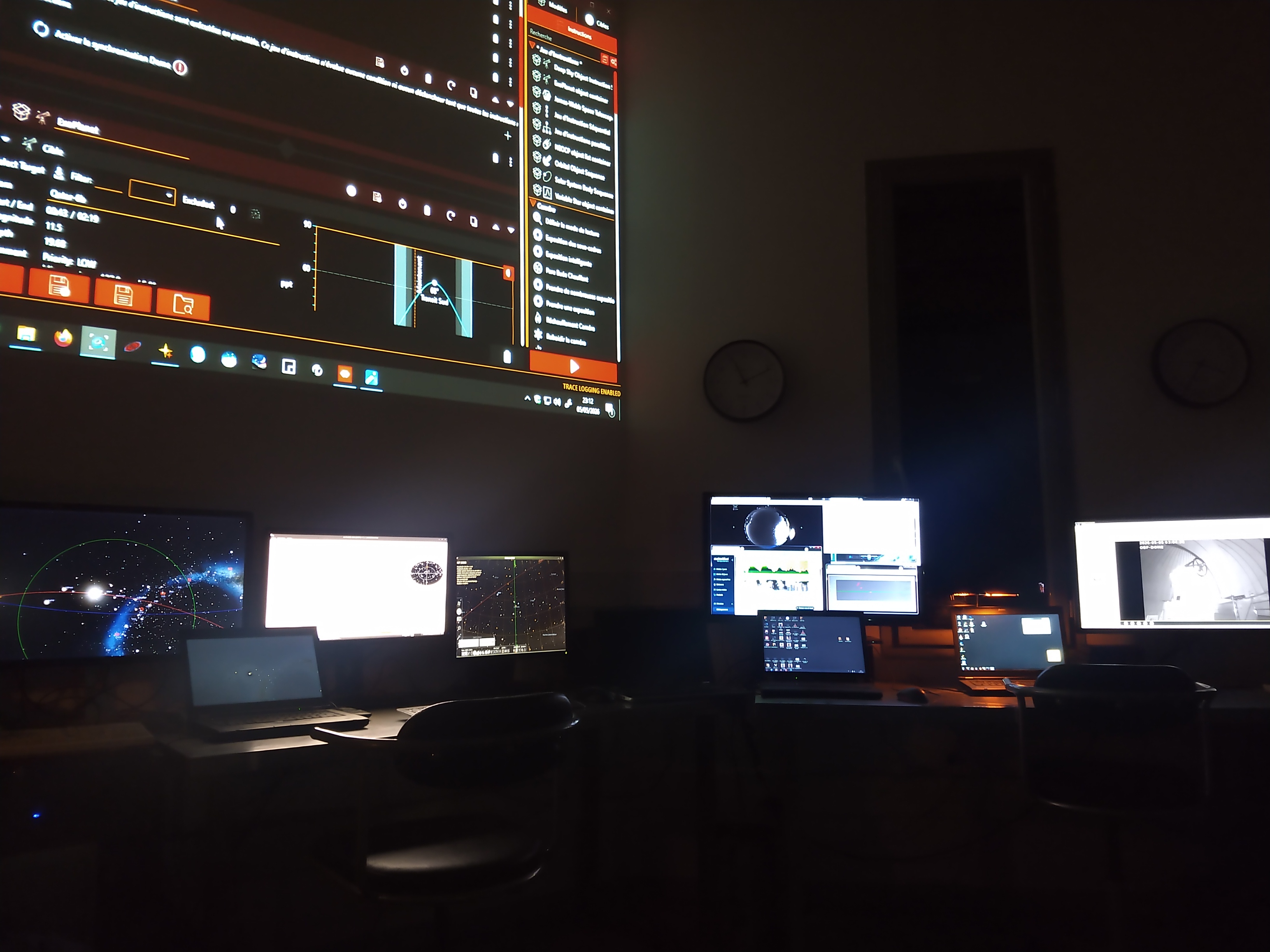
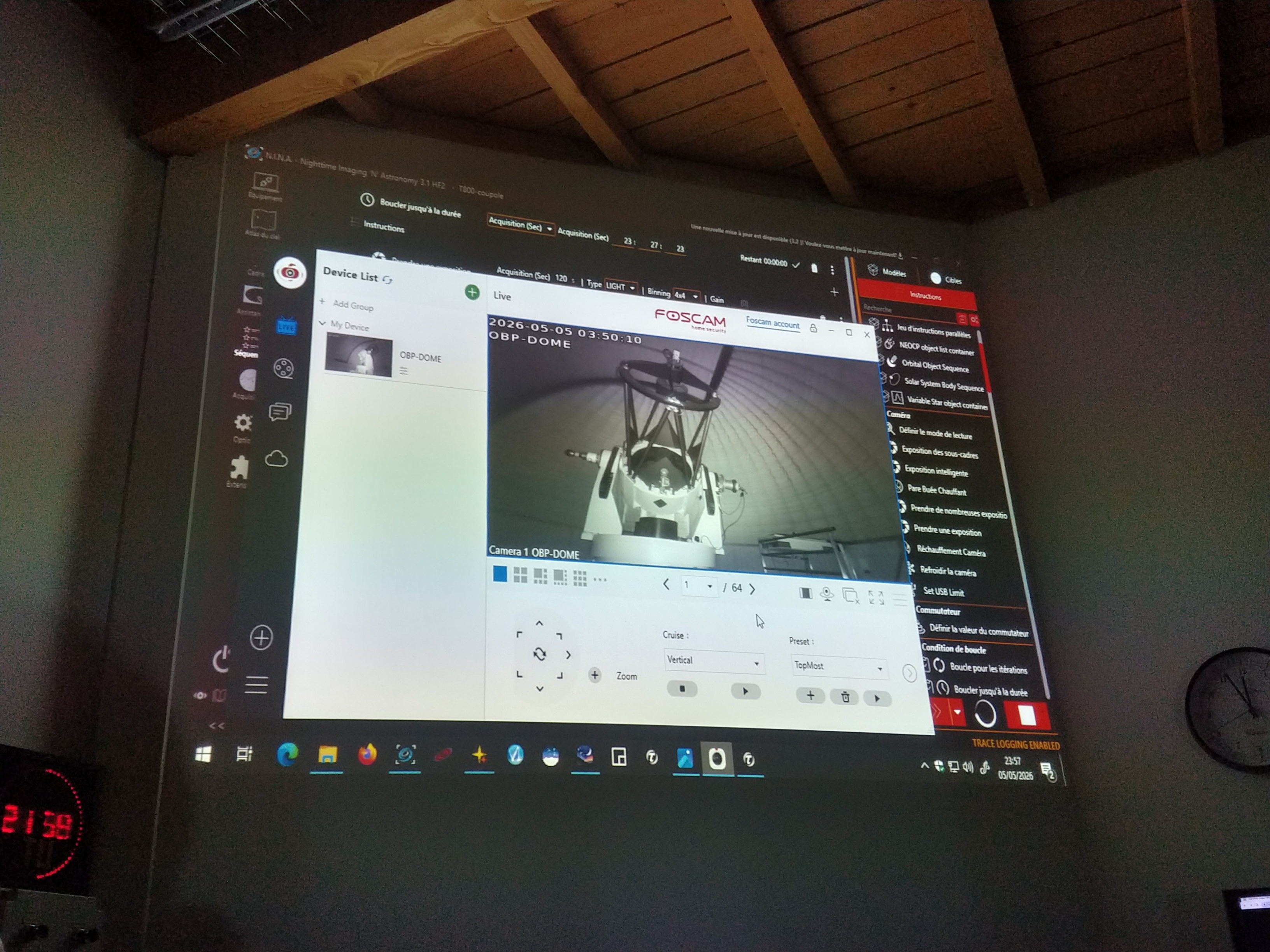
As part of the ExoClock program, the ARIEL group in France had organised a group training program earlier this year for students and post-docs. Our meeting point was the Avignon TGV train station in the south of France. From here we embarked on a 3-hour bus journey up the hills to the Observatoire des Baronnies Provençales in the French Prealps. Soon after our arrival, we realised that the nights were unfortunately going to be cloudy and observations would be impossible from the observatory. Therefore, we used our backup plan, which was to remotely use a telescope located in Chile! We were lucky enough to have access to a telescope in Deep Sky Chile, which is a private telescope farm in the Andes mountains.
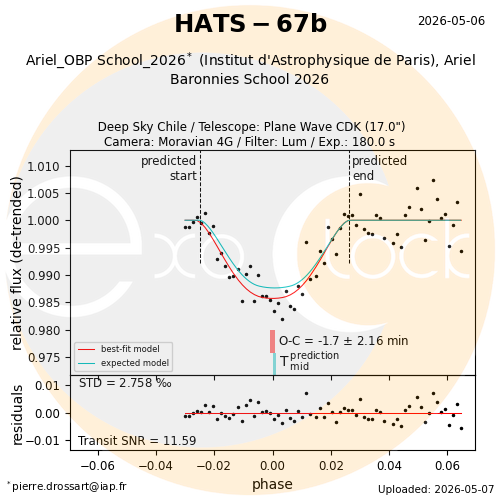
Because of the difference in timezones, dusk in Chile was the middle of the night in France. This meant that we had to wake up at 2 AM to remotely program and set up the telescope! Once we verified that the data was being transmitted to us, we could go back to sleep and check the full dataset the next morning. We did two nights of remote observations and were quite successful in obtaining the required data for the planets ‘HATS-31b’ and ‘HATS-67b’. However, our observation of ‘HATS-58Ab’ was interrupted midway, because a gust of high wind caused the roof over the telescope to automatically close for the next hour as a precautionary measure.
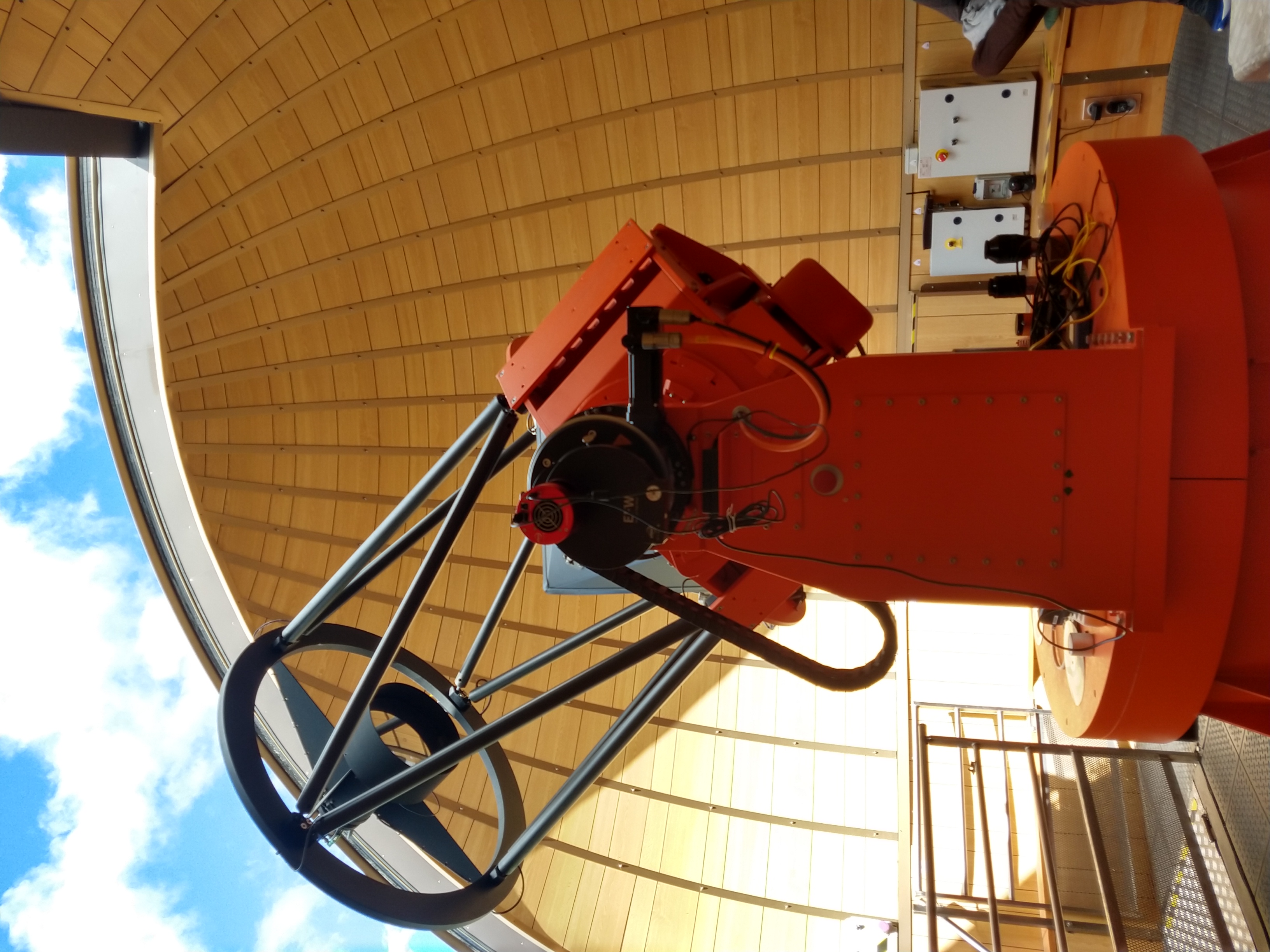
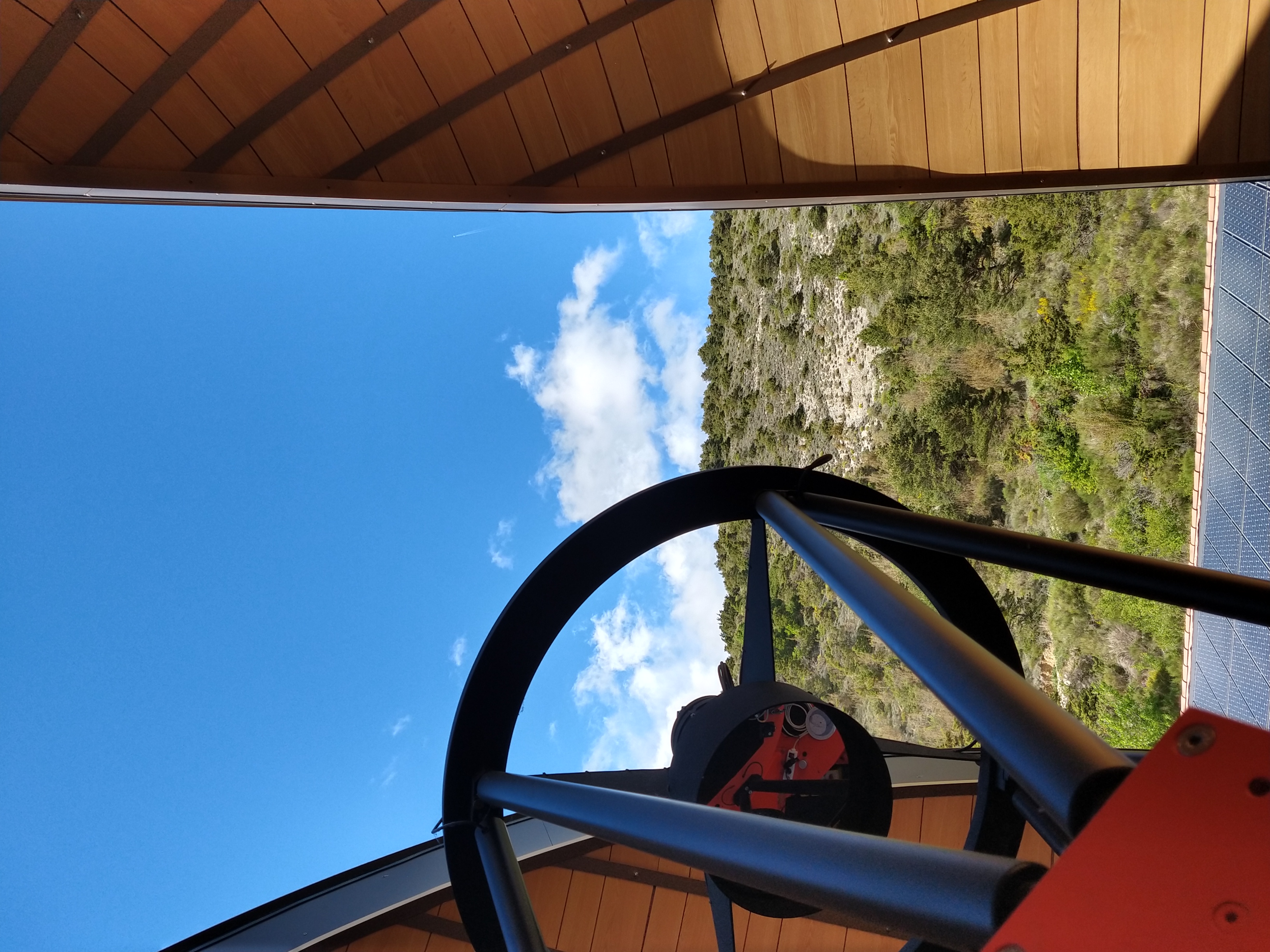
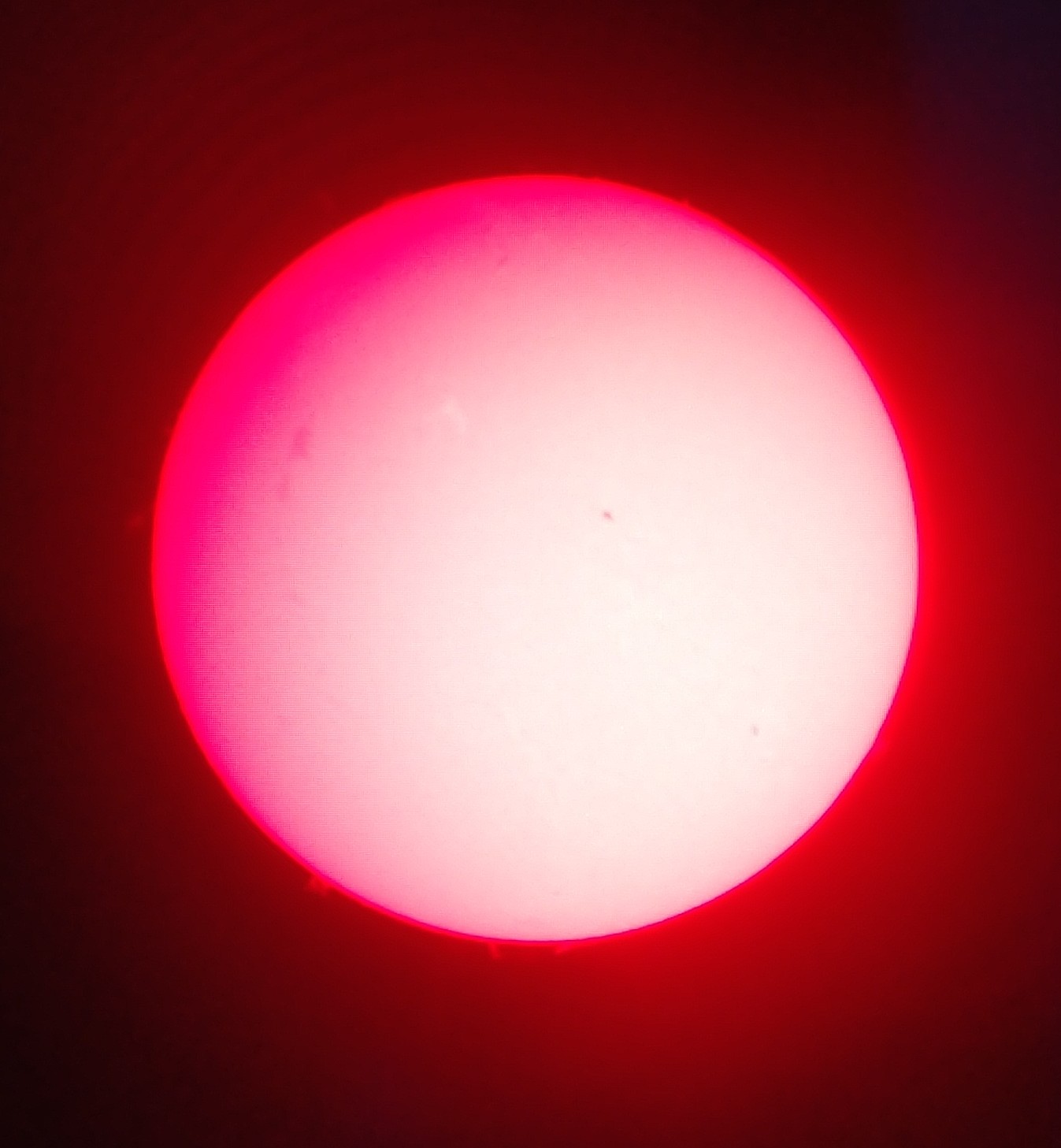
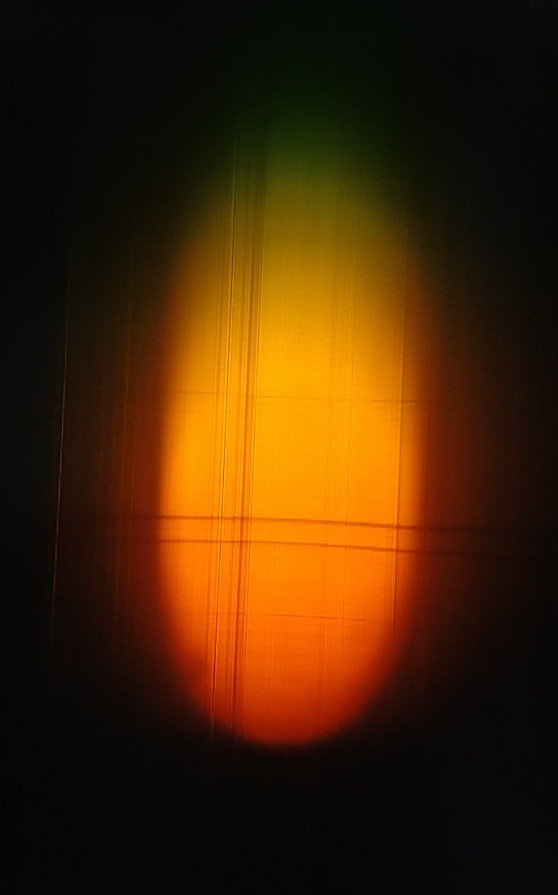
Even though we did not use the telescope at Baronnies Provençales to perform the transit observations, we got a tour of all the equipment during daytime, when we ironically had excellent weather. The primary telescope is a 82 cm Cassegrain-Nasmyth telescope with a robotic mount and is housed inside the main dome. We briefly observed Jupiter, Venus, and some bright stars, which are all observable during daytime. We were also shown numerous other observation equipment, including a solar telescope.
From raw images to light curves
Once we had finished our observations with the telescopes, we travelled back to the medieval city of Avignon and began analysing the data that we had collected. Our main analysis software was a Python-based tool called “HOPS”. This tool and a detailed guide can be downloaded from the official website, and it is relatively straightforward to use: HOPS. We also used a slightly more advanced software called Muniwin, which gives us more control over the analysis.
Both of these analysis tools work on the same principle. You provide the software with all your photos the cover the entire transit event. The software then measures how the brightness of the star changed over the several hours of observation. However, the brightness of stars vary throughout the night due to atmospheric distortions. To compensate for this, the tools ask you to provide a few nearby comparison stars from your photos. Using the brightness variations of these nearby stars, the transit target’s brightness can be corrected to remove the atmospheric effects. In our experience, we found that Muniwin performed better at this step. After this calibration, the software performs a mathematical fitting of the target’s brightness variation and calculates the timing of the exoplanet transit. The output parameters include the \(O-C\) time and the radius of the planet. The final step involves uploading the analysis to the database!
A call to the world’s amateur astronomers: You can help too!
The ARIEL ExoClock program is a very straightforward yet rewarding way for amateur astronomers get involved with the frontier of exoplanetary science. If you are an observer with a small or medium telescope with a CCD or CMOS camera, you will be able to observe the targets suggested by ExoClock and upload your analysis to the public database! Head over to the ExoClock website to get started: ExoClock